
Pure Harvest hero
Case Study
RoleProduct Designer
Timeline2 months, 2024
ToolsFigma & Illustrator
TypeClass Project

Pure Harvest

Designing an organic grocery experience.

A class project focused on making organic grocery shopping feel simple, trustworthy, and aligned with the values people bring to healthy living.

Pure Harvest browse and search flow
Project Overview

Designing a grocery app that feels fresh, reliable, and easy to trust.

Pure Harvest is a conceptual app for an organic grocery store. The project explored how a mobile shopping experience could make healthier choices feel more accessible through clearer information, better personalisation, and a warmer, more dependable interface.

Pure Harvest logo

Product

Organic grocery shopping app

Problem

Healthy shopping felt opaque and inconvenient

Audience

People shopping for trusted, high-quality groceries

Role

Product Designer

Duration

2 months

Tools

Figma, Illustrator

Methods

Primary research, secondary research, ideation

Outcome

High-fidelity mobile concept and design system

Why This Problem Matters

Health-conscious shoppers want reassurance, not friction.

As wellness habits become more mainstream, people are increasingly looking for grocery experiences that combine trusted organic products, transparent nutritional information, and practical convenience. Existing solutions often make them choose between speed and confidence.

The opportunity for Pure Harvest came from a simple tension: people want to build healthier routines, but grocery apps often feel generic, transactional, and unclear. For organic shoppers, that is a deeper issue. They are not only buying food. They are buying into trust, quality, and values.

Limited access to organic groceries in one trusted destination

Time-consuming reorders for staples and repeat purchases

Unreliable delivery and weak tracking visibility

Generic shopping experiences with little personalisation

Missing nutritional information and ingredient clarity

Complex UI patterns that create friction instead of confidence

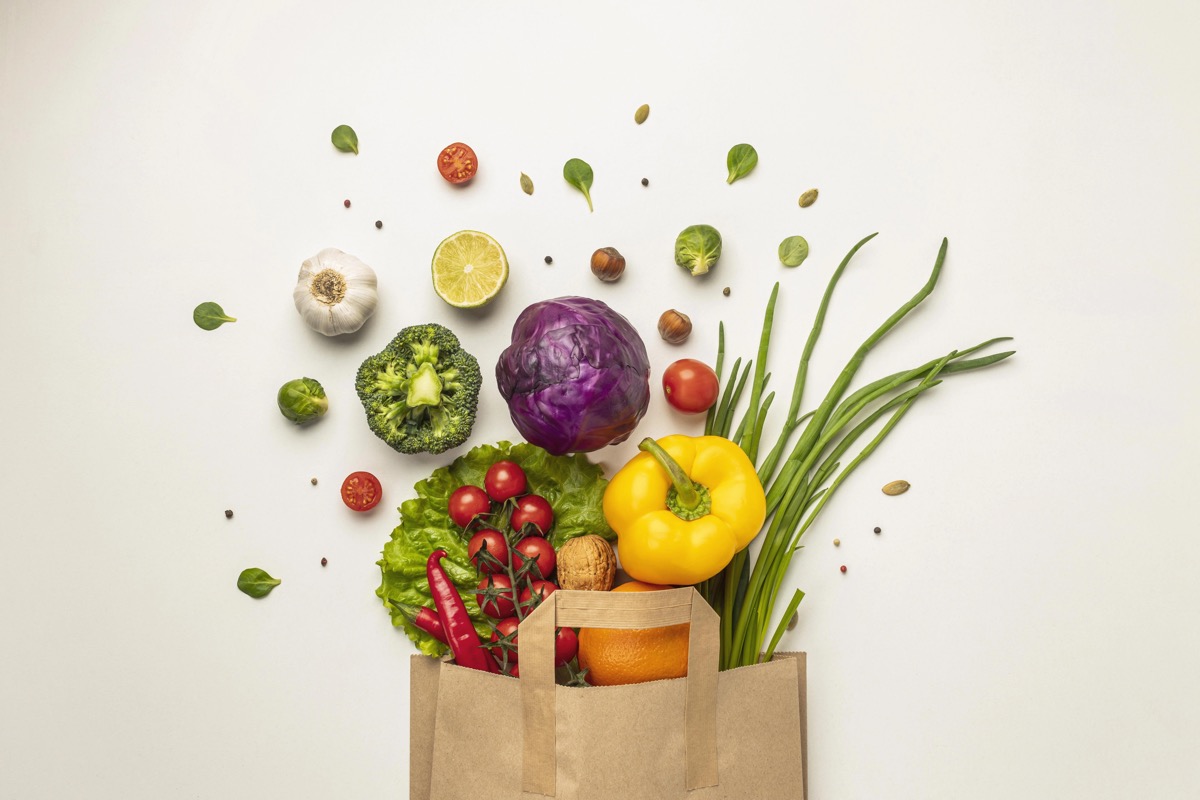
People choosing fresh groceries

Framing Statement

β€œThe challenge was not just helping people buy groceries faster. It was helping them feel confident that what they were buying matched their health goals, values, and routines.”

Research & Discovery

Research focused on how trust, wellness, and convenience intersect.

The project combined primary and secondary research to understand what organic shoppers needed emotionally and practically from a grocery app.

Primary Research

Empathy mapping and user modeling

Primary research explored how people talk about organic shopping, what information they trust, and where frustration enters the process. Empathy mapping made it easier to translate what users say, think, feel, and do into clearer design direction.

β€œI want organic options, but I do not want to spend extra time verifying every product.”
β€œIf I am trying to eat better, I need the app to make healthy choices easier, not harder.”
β€œI care about ingredients, but most grocery apps bury the information I actually need.”

Empathy Map Summary

Says: I want healthier choices, but I do not want to spend extra time decoding labels.

Thinks: If the app cannot explain ingredients clearly, it may not be worth trusting.

Feels: Motivated by wellness, but frustrated when delivery, tracking, or product quality feels uncertain.

Does: Reorders staples, compares alternatives, checks ingredients, and looks for shortcuts that still feel reliable.

Stay-at-home parent
User 01

Stay-at-home parent

Works to keep the household stocked with clean, reliable food while balancing budget, convenience, and family routines.

Wants trustworthy products with transparent sourcing
Needs fast repeat ordering for staples
Looks for healthy choices without overspending

Managing director with dietary restrictions
User 02

Managing director with dietary restrictions

Has very little time and uses grocery delivery to stay consistent with a health-driven routine that depends on ingredient clarity.

Values quality and transparency over price
Needs fast, dependable delivery and tracking
Relies on clear nutrition and ingredient detail
Organic lifestyle enthusiast
User 03

Organic lifestyle enthusiast

Sees organic food as self-care and an investment, but remains cautious about overspending or buying into empty wellness marketing.

Wants products that feel aligned with personal values
Needs reassurance through labels and sourcing information
Enjoys discovery, but not at the cost of simplicity

Secondary Research

Competitor analysis and user goals

I reviewed five competitors in the Indian grocery market to understand where they performed well, where they fell short, and which patterns users have learned to tolerate. The analysis focused on product range, nutritional clarity, delivery, usability, pricing behavior, and reordering.

The clearest pattern was that convenience features existed across the category, but very few products paired that speed with the kind of ingredient transparency, trustworthy delivery communication, and calm interface design that organic shoppers actually need.

User goals

Access trusted organic groceries in one place
Save favourites and reorder quickly
Track deliveries with more confidence
Receive recommendations based on past behavior
Understand nutrition, ingredients, and macros easily
Shop through a clean, low-friction interface
Most apps optimize for speed first, not reassurance.
Nutrition and ingredient detail often feels secondary or buried.
Reordering exists, but rarely feels tailored to healthy routines.

Detailed comparison

Competitor comparison

Where existing grocery experiences fall short

CompetitorRange & AvailabilityNutrition InfoDelivery & TrackingUI UsabilityPricing & OffersReordering
Competitor 01Wide range, but inconsistent organic availabilityBasic labels with limited depthStrong logistics, weak real-time reassuranceFunctional but crowdedFrequent offers, low differentiation for organic qualityEasy reordering, weak personalisation
Competitor 02Strong catalogue, limited specialty curationInconsistent macro visibilityFast delivery promises, limited tracking clarityDense interface with many competing actionsAggressive discountsDecent shortcuts, not habit-friendly
Competitor 03Good premium assortmentSome ingredient transparencyReliable but impersonalCleaner UI, lower warmth and guidanceHigher prices with fewer value cuesLimited favourites behavior
Competitor 04Broad mainstream selection, weaker organic focusMinimal product educationDelivery-first messaging dominates experienceEfficient but genericPrice-led experienceFast reorder supported
Competitor 05Niche organic appeal, weaker accessibilityStronger values messaging than practical infoLess reassurance on order statusVisually appealing, less intuitivePremium feel, low justificationRepeat purchase flow not streamlined
Key Insights

The design needed to feel reassuring before it felt efficient.

Each insight shaped a concrete design implication, so the final concept stayed grounded in user values instead of generic grocery-app conventions.

01

Trust and transparency are essential, not optional

Organic shoppers are making value-based decisions. They need reassurance through clear sourcing, labels, and ingredient detail before they are willing to commit.

Design implication

Surface ingredient transparency, sourcing cues, and clear product education at every decision point.

02

Convenience cannot come at the cost of clarity

Users want reordering, delivery, and checkout to be fast, but not if that speed hides the information they depend on to make healthy choices.

Design implication

Design flows that stay efficient while keeping nutrition, ingredients, and order status easy to understand.

03

Access and personalisation work together

People want healthy choices to feel available and tailored to them, especially when they are managing routines, dietary restrictions, or recurring orders.

Design implication

Use favourites, saved combinations, and recommendations to reduce repeat effort without making the experience feel generic.

04

Simple interfaces reduce friction and increase trust

When a grocery app feels cluttered, users question not only usability but also the quality and reliability of the service behind it.

Design implication

Use strong hierarchy, fewer competing actions, and warm but restrained visuals to make the experience feel dependable.

05

Nutritional information builds confidence

Clear macro and ingredient breakdowns help users feel in control, especially for beverages, smoothies, and products tied to health goals.

Design implication

Make labels, macro tracking, and ingredient alerts central to the product experience rather than buried details.

06

Organic choices are tied to self-care and indulgence

Users associate organic grocery shopping with feeling better, living intentionally, and treating themselves well, not just completing a transaction.

Design implication

The experience should feel fresh, reassuring, and lightly indulgent without becoming visually noisy or overly luxe.

Design Opportunities

Six opportunities translated research into action.

The design direction focused on making confidence visible, repeat behavior easier, and product information more transparent.

01

Make trust visible at every step

Use clear labels, sourcing cues, and ingredient transparency to reassure users as they browse, compare, and customise.

02

Streamline repeat ordering

Support favourites, saved combinations, and faster reorder patterns for high-frequency purchases.

03

Ensure reliable, trackable delivery

Design delivery updates and checkout summaries that reduce uncertainty and communicate progress clearly.

04

Reduce cognitive load with personalisation

Use recommendations and saved items to make the experience feel tailored without overwhelming users with choice.

05

Make nutrition easy to understand

Turn ingredient lists, macro breakdowns, and dietary cues into useful product information rather than secondary content.

06

Use strong hierarchy and minimal clutter

Keep the UI warm and expressive, but simple enough that healthy decisions always feel easier than hunting for information.

Ideation & Iteration

The concept improved as the flows became simpler and more specific.

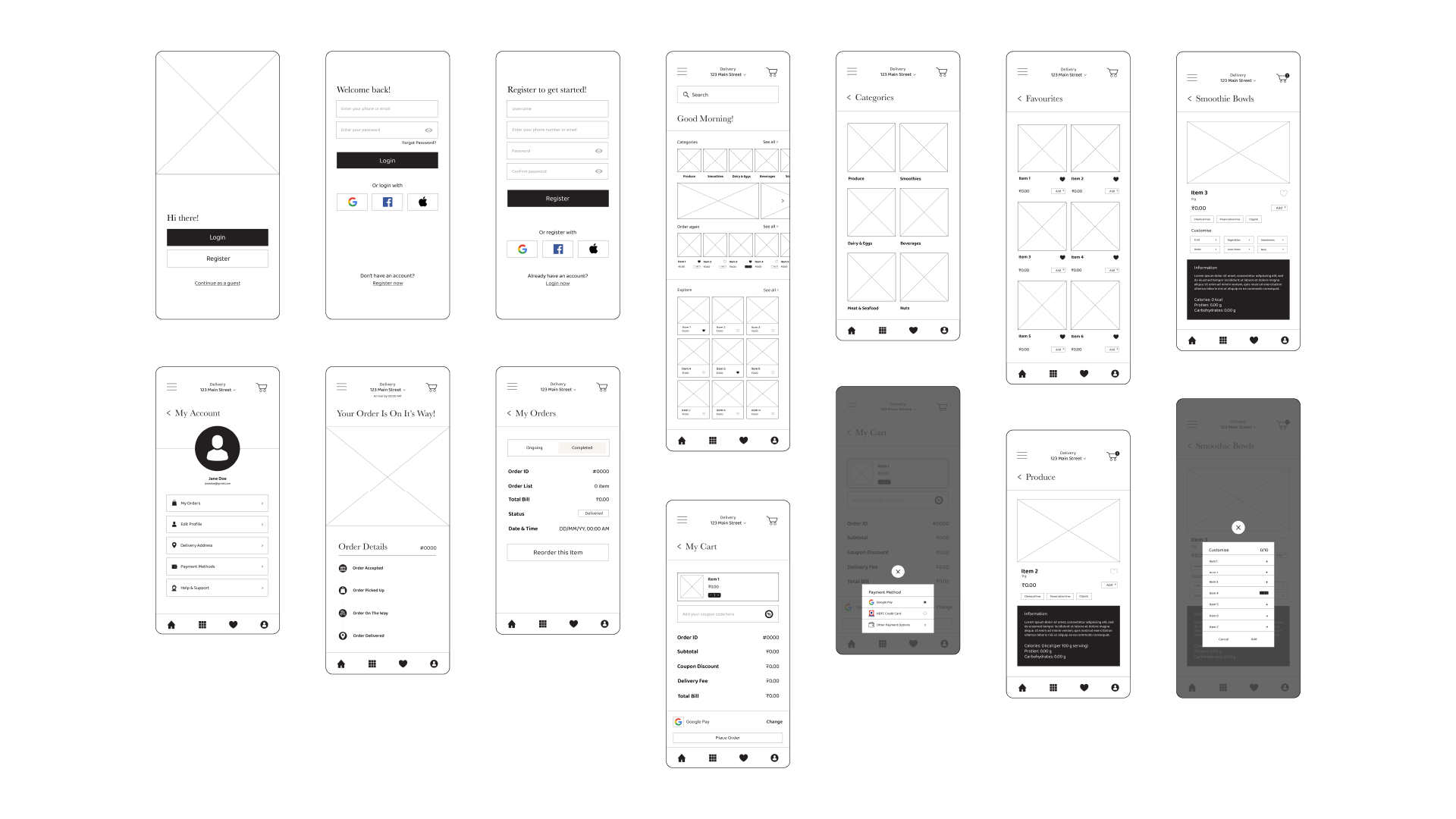
Wireframes, design studies, and low-fidelity experiments helped test what should feel fast, what should feel informative, and where the interface was trying to do too much.

What I explored

Ideation focused on shopping flows, product detail hierarchy, and how to combine warmth with clarity. I created early wireframes, tested content density, and used the design system to determine where information should feel educational versus transactional.

Low-fidelity wireframes

What did not work

Overcomplicated filtering created more friction than confidence.

Early exploration leaned too heavily on layered filters and dense product controls. It made the app feel capable, but it also made users work too hard before understanding what to buy.

Learning from iteration

The better direction was a simpler flow with stronger hierarchy, fewer competing controls, and more visible nutrition information. The app felt more trustworthy when it became easier to scan.

Final Solution

A grocery experience designed around clarity, health, and repeat trust.

The final direction made it easier to browse high-quality organic products, customise beverages and smoothies, understand ingredients, and move through checkout without uncertainty.

Visual Design

High-fidelity screens helped validate the look and feel of the product while keeping the experience clear, warm, and usable.

Hero page

Landing experience with browse-first discovery and category hierarchy.

Browse & Search
Feature 01

Browse & Search

The browsing experience introduces categories such as produce, dairy, meat, seafood, pantry, and beverages through warm imagery and strong structure. It helps users discover healthy options quickly without making the app feel crowded.

Design note

Landing and browse entry point with strong brand warmth, clear hierarchy, and food-forward imagery.

Smoothie Customisation
Feature 02

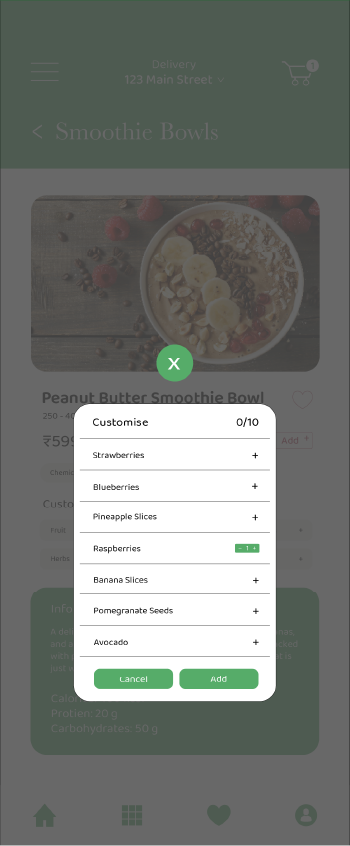
Smoothie Customisation

Users can build a smoothie with real-time macro tracking, ingredient transparency, and saved recipes. This directly addresses the need for personalisation, reassurance, and nutritional visibility in one flow.

Design note

Shows the customization overlay in context so the interaction feels controlled instead of overwhelming.

Order a Beverage
Feature 03

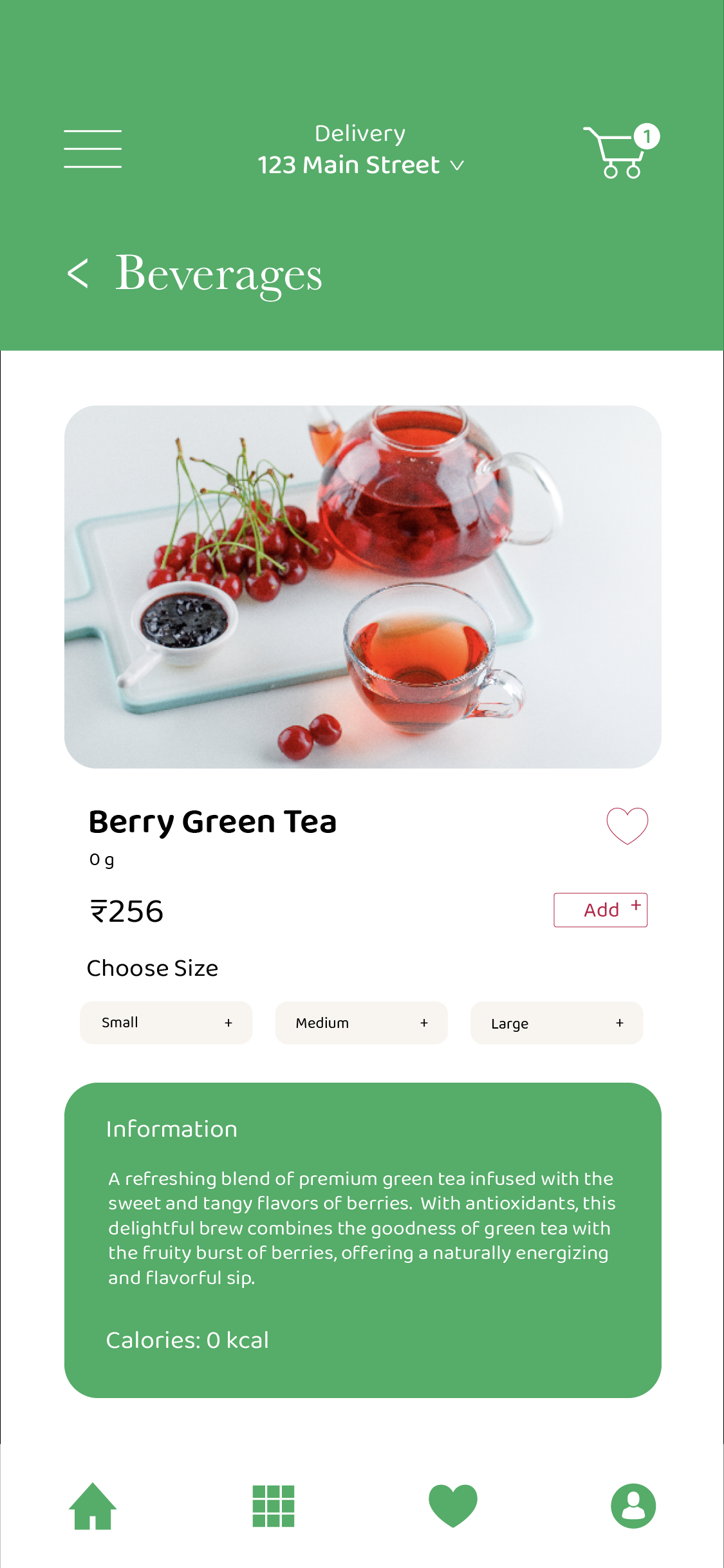
Order a Beverage

The beverage flow makes customisation clear through simple controls, easy size selection, and favourite-saving behavior. It is designed to feel easy for repeat use, not just visually attractive.

Know Your Ingredients
Feature 04

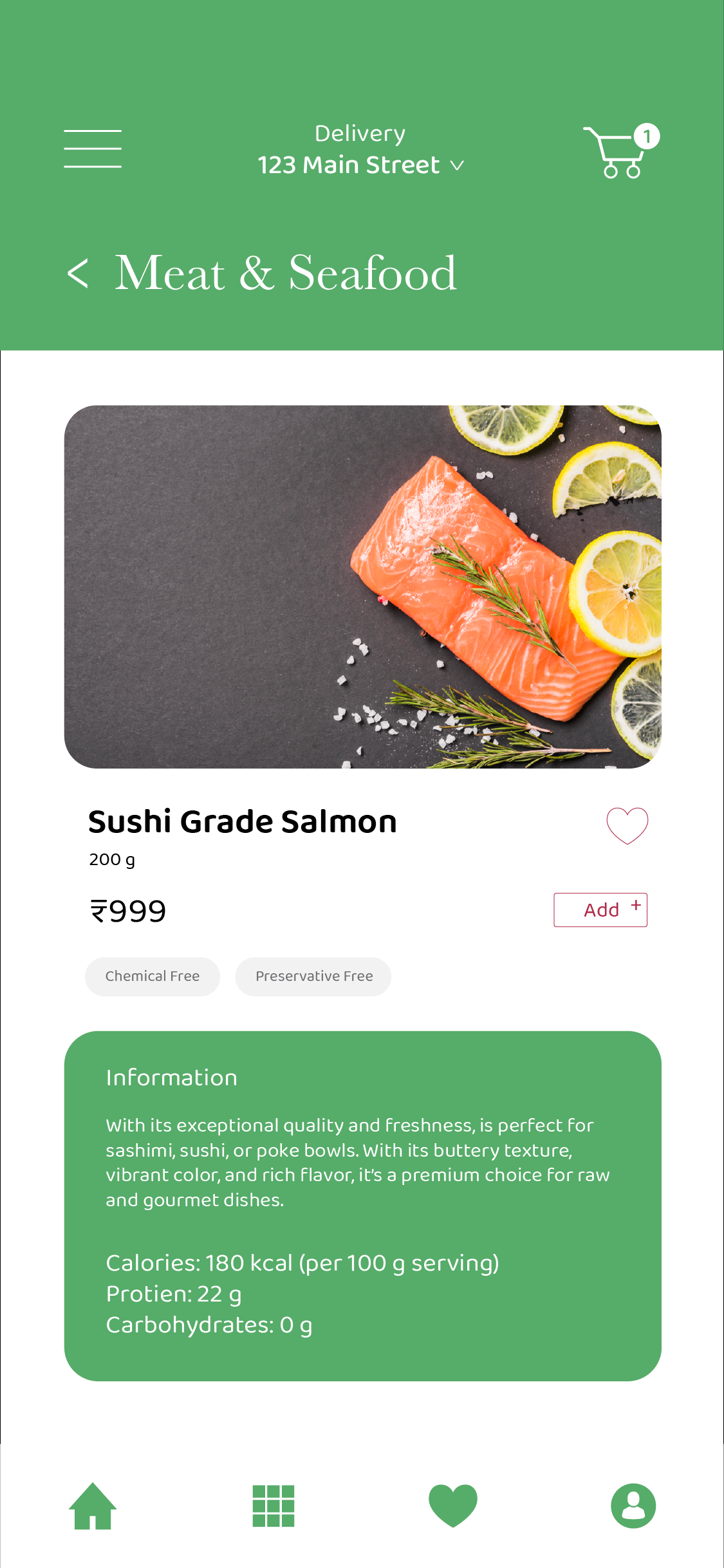
Know Your Ingredients

Ingredient labels, non-GMO cues, organic markers, and macro breakdowns help users understand what they are buying without leaving the product context.

Design note

Replace with product detail screens that foreground ingredient labels and nutrition education.

Cart & Checkout
Feature 05

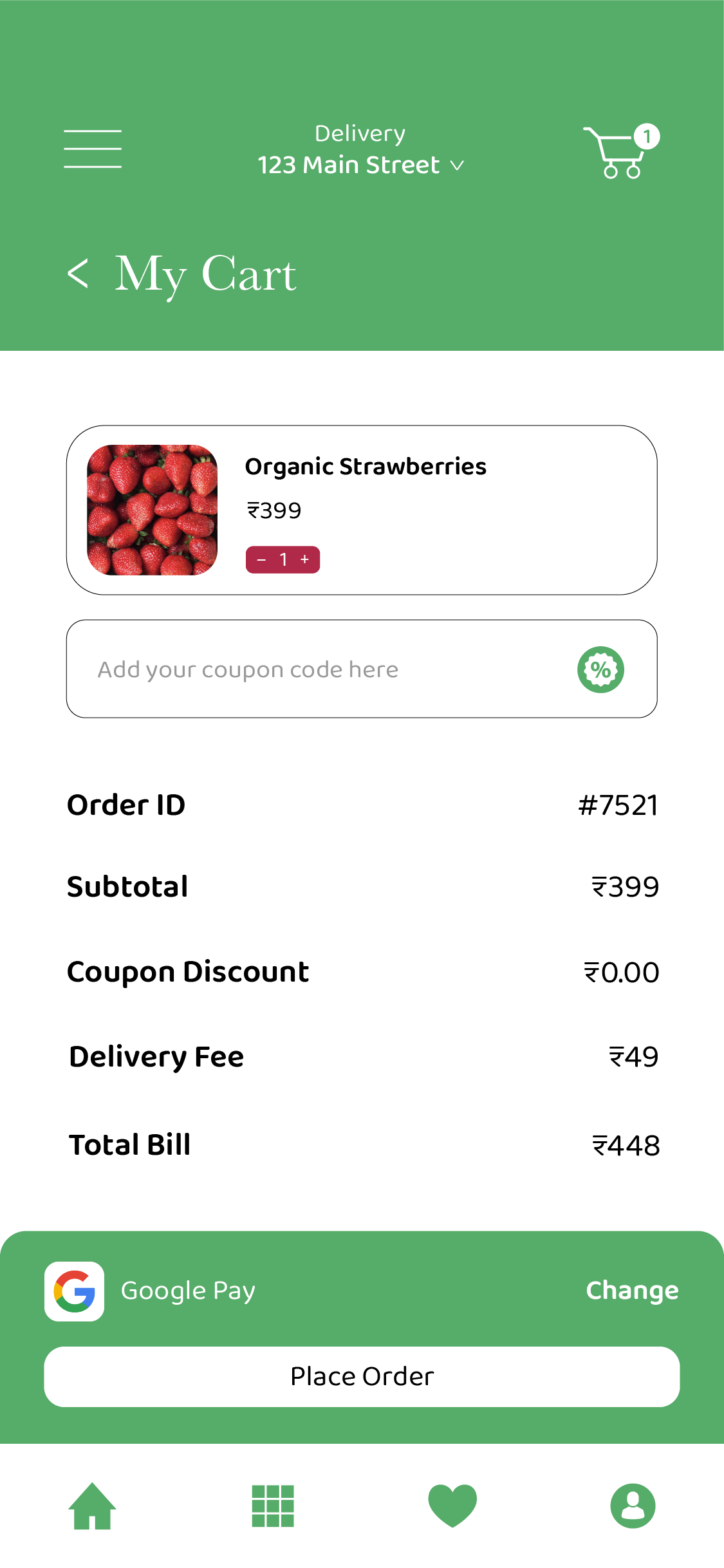
Cart & Checkout

Checkout is simplified to reduce friction while still giving users confidence in timing, items, and delivery status. The goal is reassurance, not novelty.

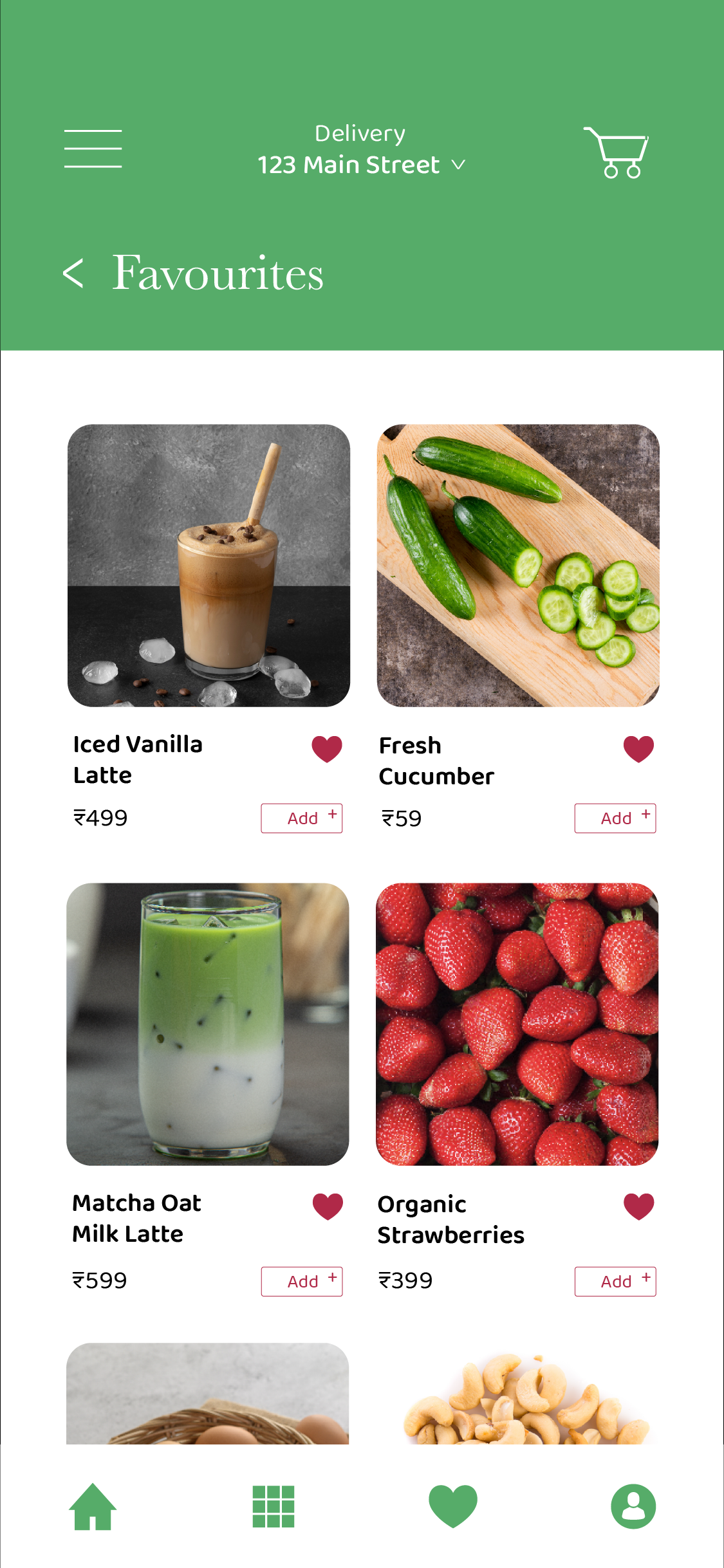
Personalised Recommendations & Favourites
Feature 06

Personalised Recommendations & Favourites

Saved items, routine combinations, and recommendations based on previous behavior help users come back to healthy choices faster.

Design System

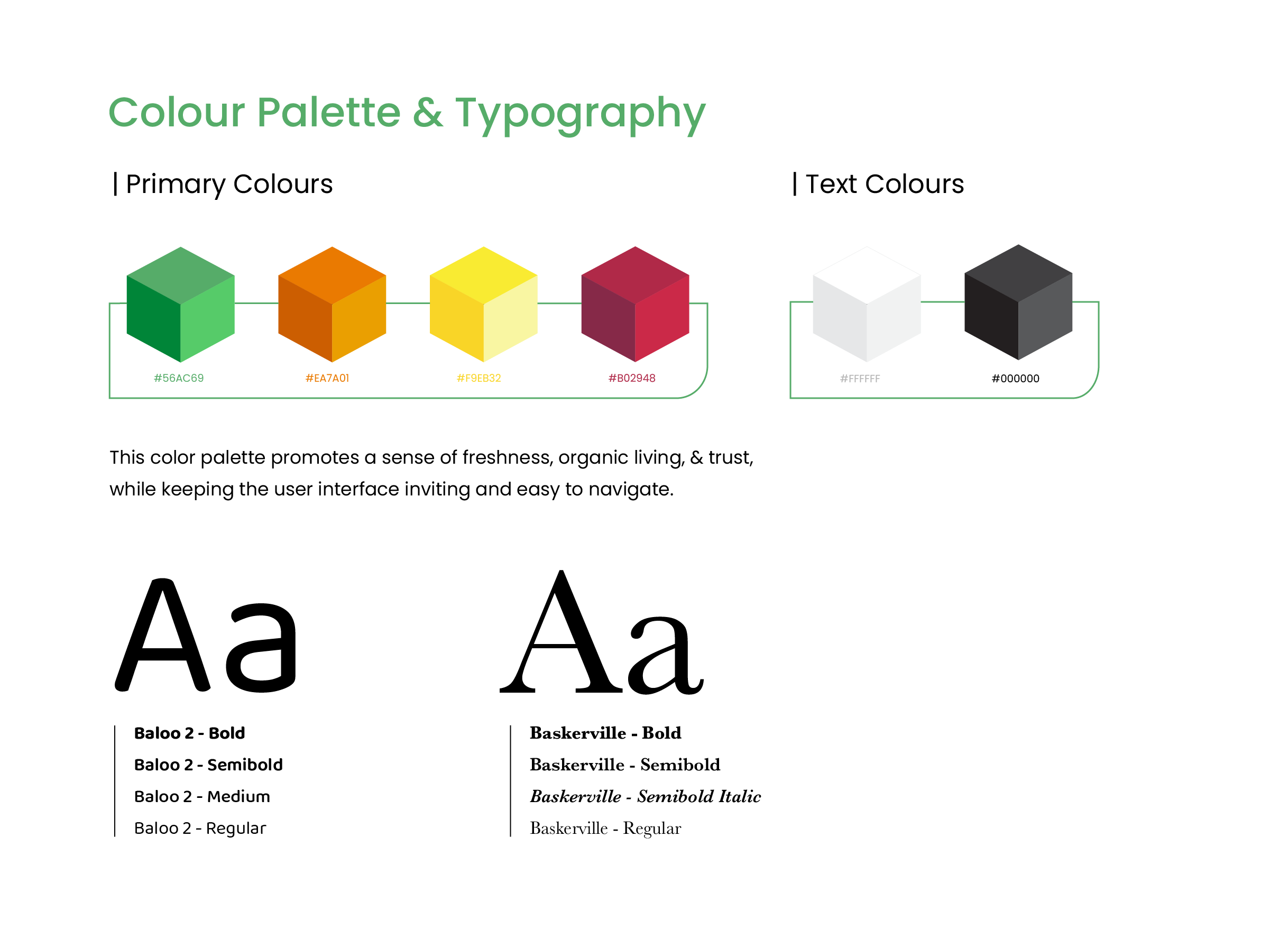
Fresh greens, warm accents, and a blend of friendly and editorial typography.

The visual system was designed to balance reassurance with freshness. It needed to feel healthy and inviting without becoming generic or overly clinical.

Color palette

Harvest Green

#5CBF4C

Primary actions, trust cues, and fresh category emphasis

Citrus Orange

#E29663

Warm highlights, food accents, and supportive emphasis

Sun Yellow

#F3D547

Energetic highlights and attention moments

Berry Red

#E11D48

Core brand accent used for stronger contrast and featured states

Cream

#FAF7F2

Page background and breathing room

Olive Ink

#2E3328

Primary text and grounded contrast

Typography

Pure Harvest typography exploration board

Component direction

Primary button

Secondary button

Label direction

OrganicNon-GMOHigh Protein
Outcomes & Reflection

A conceptual project centered on confidence, not just convenience.

Because Pure Harvest is a class project, the strongest outcomes are qualitative: clearer navigation, stronger nutritional visibility, and a design direction better aligned with user values.

01

Improved confidence

The concept made trust more visible through labels, ingredients, and stronger product information hierarchy.

02

Simplified navigation

Flows were refined to reduce complexity and support repeat behavior like favourites, saved recipes, and quick reorder.

03

Validated direction

Research and iteration helped ground the visual design in reassurance, freshness, and user values rather than trend-driven styling.

Next steps

If this concept moved into implementation, the next step would be validating the final flows through usability testing, especially around ingredient transparency, beverage customisation, and delivery tracking. I would also test how recommendations and favourites support long-term grocery routines without making the experience feel overly algorithmic.

β†’

Designing for reassurance is as important as designing for efficiency

Users needed to feel confident in what they were buying, not just move faster through the app. That shifted the whole tone of the design.

β†’

Strong hierarchy supports trust

The cleaner the structure became, the easier it was for users to focus on what mattered most: ingredients, labels, price, and delivery confidence.

β†’

User values should shape the visual system

Warm greens, softer neutrals, and editorial typography made the experience feel more aligned with health, freshness, and intentional living.

β†’

Convenience works best when paired with authenticity

Features like favourites, saved recipes, and quick reorder mattered more when they felt grounded in real health goals rather than generic e-commerce patterns.

β†’

Research and iteration created the right level of simplicity

The strongest decisions came from reducing clutter, clarifying information, and keeping the product useful for repeat use rather than over-designing the concept.

You’ve reached the end, ready for another experience?