



Case Study
Timeline1 month
RoleProduct Designer
Team4 members
Year2026
Amazon Music logo

Amazon Music

Product design challenge focused on optimizing Amazon Music for Ai-driven discovery & engagement.

Everything has a sound. What does your world sound like?

Project Overview

Designing one feature to do two jobs.

Amazon Music already has access to massive distribution. It still needed a stronger reason to be opened, tried, and returned to.

What

A concept feature for Amazon Music that uses a phone camera to turn real-world scenes into personalized playlists.

Role

Product Designer

Scope

Research, concept development, interaction design, ecosystem strategy

Timeline

1 month

Outcome

An end-to-end product concept for contextual music discovery using AI-powered visual interpretation.

The Challenge

Music is emotional. Discovery still feels mechanical.

Amazon Music did not need more catalog. It needed a discovery experience that better translated real moments into listening decisions.

Problem statement

The friction isn't taste. It's translation.

01

Music discovery today is built around search bars, genre categories, and algorithmic recommendations that recycle the same patterns over time.

02

Most listeners fall into passive habits, replaying familiar playlists rather than exploring something new, because the effort to find fresh music is too high.

03

No major streaming platform takes real-world context into account. Where you are, what you see, and what your moment feels like are completely invisible to the product.

Why this matters

Music is deeply emotional

People do not just listen to music. They use it to process feelings, set the tone for experiences, and create memories. A product that understands emotional context can form a much stronger bond with its users.

Context-aware products are the next standard

Users increasingly expect technology to adapt to their environment. From smart home routines to location-based recommendations, passive intelligence is becoming baseline, not a luxury.

Better discovery drives retention

When users find music that genuinely matches their moment, they listen longer, return more often, and associate the platform with a feeling of being understood. Discovery quality directly impacts engagement and stickiness.

The Concept

See your world. Hear its soundtrack.

Point the camera at any moment and let Amazon Music turn what you see into what you hear.

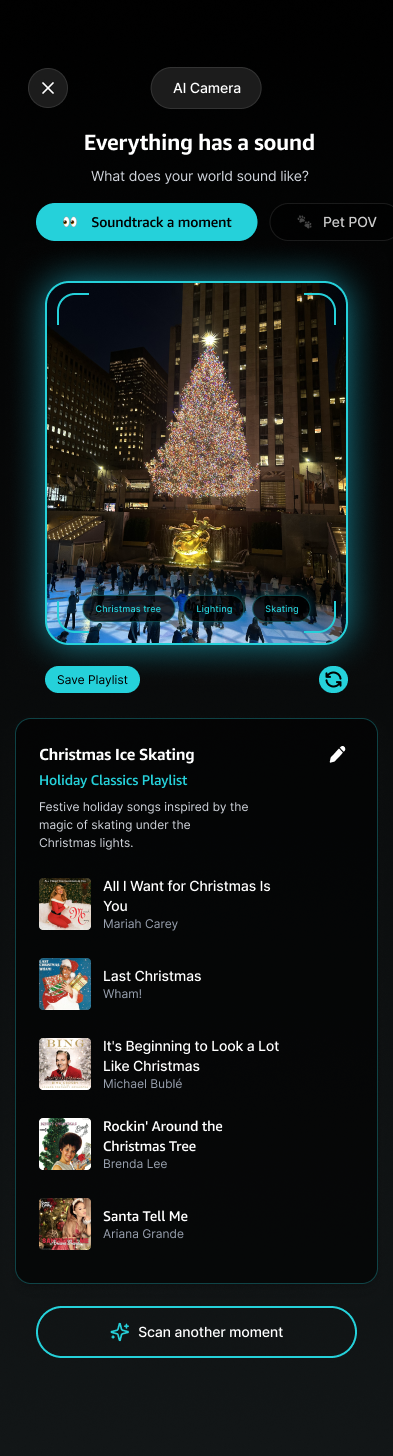
Scene Scan

Soundtrack this moment

Capture your current scene and generate a playlist that matches the exact visual mood, lighting, and energy around you.

Generating playlist
Generated playlist for Soundtrack moment

Analyzing scene for Soundtrack moment

Taste Mapping

What would this taste like?

Use food visuals to translate flavor cues into music tone, then generate a playlist that feels spicy, sweet, rich, or mellow.

Generating playlist
Generated playlist for Taste to music

Analyzing scene for Taste to music

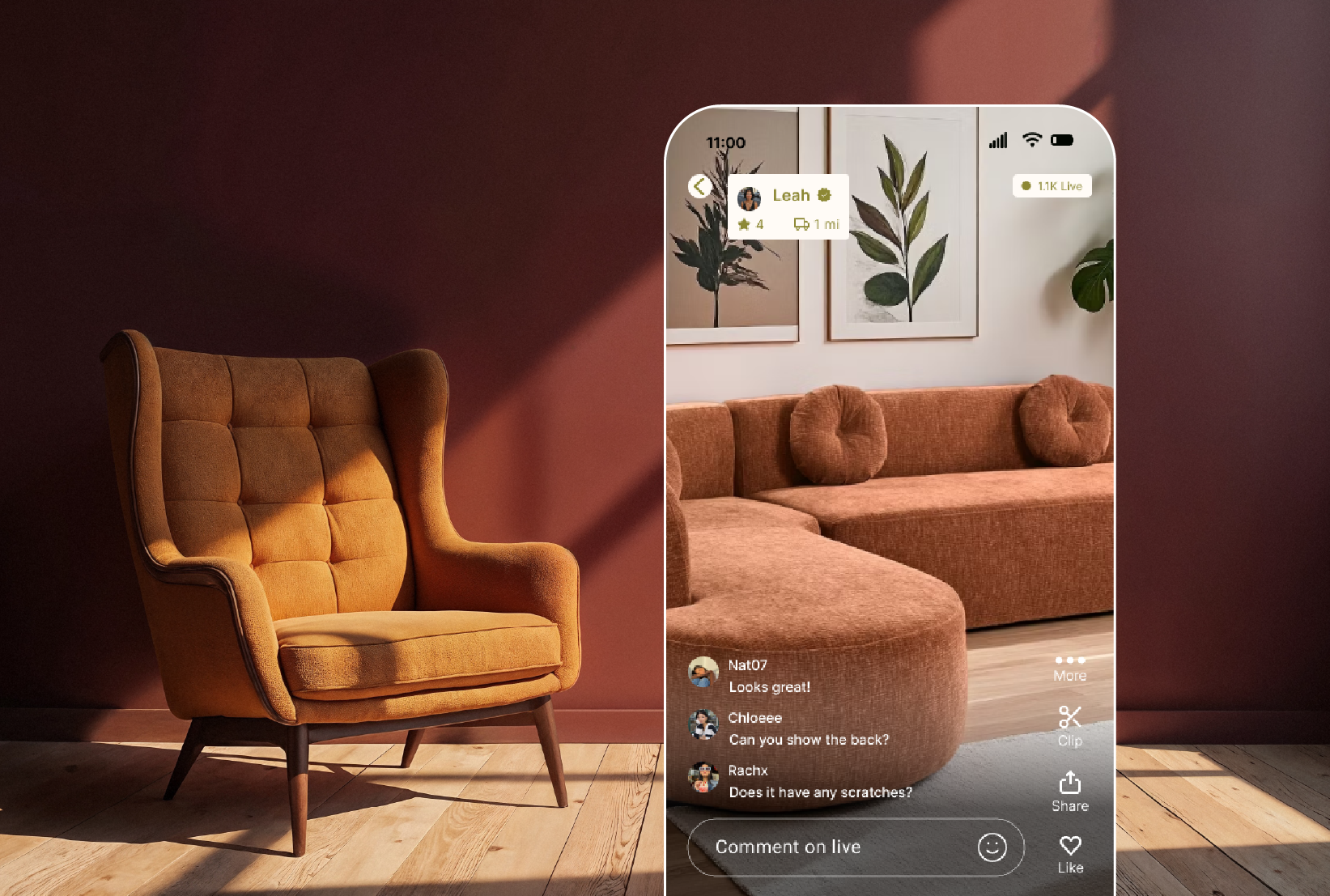
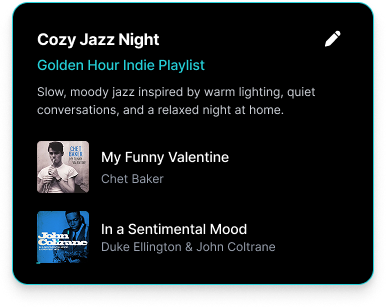
Room Aura

Read the room vibe

Analyze interior atmosphere and ambient cues to generate a playlist that fits your room's current aura.

Generating playlist
Generated playlist for Room vibe

Analyzing scene for Room vibe

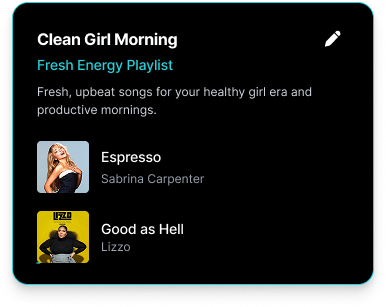
Everyday Context

What's in your fridge?

Turn an ordinary daily snapshot into contextual discovery and generate a playful playlist from routine life moments.

Generating playlist
Generated playlist for Everyday life

Analyzing scene for Everyday life

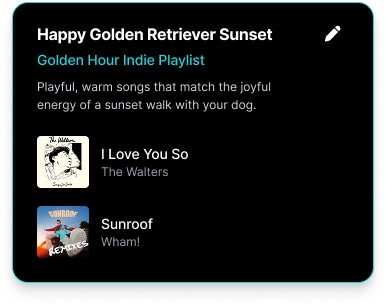
Pet Lens

Pet POV soundtrack

Scan your pet's scene and generate a mood-matched playlist that feels curious, light, and emotionally sticky.

Generating playlist
Generated playlist for Pet POV

Analyzing scene for Pet POV

Design Process

Following the Double Diamond.

The framework helped structure the work from open exploration through focused delivery, keeping the concept grounded in user needs at every stage.

Double Diamond framework diagram

Phase 01

Discover

Explored how people currently find music, where friction exists, and how real-world moments influence listening choices across different platforms.

Phase 02

Define

Synthesized research into key insights and framed the core opportunity: bridging the gap between physical context and digital music discovery.

Phase 03

Develop

Explored multiple concept directions including voice-first prompts, mood-selection interfaces, and AI-powered camera input before converging on the strongest path.

Phase 04

Deliver

Designed the full interaction flow, ecosystem integration strategy, sensory modes, and edge-case handling for the AI Camera concept.

Market gap

01

No streaming platform currently uses visual or environmental input as a discovery mechanism. The camera as an input for music is entirely unclaimed territory.

02

Existing discovery still relies on what users explicitly search, browse, or have already listened to. The model is reactive and backward-looking, not contextual or forward-looking.

03

There is a clear opportunity for a product to own the space between what a user sees and what they hear, creating a new category of real-world-driven music discovery.

Core opportunity

No streaming platform uses real-world visual context as a discovery input. That space is wide open.

Research

Understanding real listening behavior.

The research was designed to answer one question quickly: where could Amazon Music create a discovery behavior competitors were not already owning?

Method 01

User Interviews

Conducted conversations with 12 regular music listeners across ages 20 to 35 to understand how they discover music, where effort shows up, and what breaks the feeling of a moment.

Method 02

Surveys

Distributed a survey to 85 respondents measuring satisfaction with current discovery methods, frequency of passive listening, and interest in context-aware music features.

Method 03

Competitive Analysis

Analyzed Spotify, Apple Music, Amazon Music, and Tidal across discovery mechanics, personalization depth, and contextual awareness to identify where the market leaves an opening.

Target audiences

Primary

Gen Z (18–26)

Mobile-first and always connected, with short attention spans for manual discovery.
Values novelty, personalization, and products that feel aware of their lifestyle.
Low patience for friction in creative or entertainment experiences.

Secondary

Millennials (27–40)

Established listening habits but open to new discovery methods that save time.
Comfortable with Ai-driven features and expect products to learn their preferences.
Values convenience and integration across devices and ecosystems.
Customer demographics visualization

User stories

Alex Chen persona
Persona 01

Alex Chen

Age 26 · Commuter and passive listener

Scenario

Commuting home after a long day, standing on a crowded train with headphones on. Wants to unwind but does not want to scroll through playlists to find the right vibe.

Need

A playlist that matches the evening wind-down mood instantly without any search or input effort.

Priya Desai persona
Persona 02

Priya Desai

Age 22 · Student in a focus flow

Scenario

Studying late in her apartment with warm lamp lighting and a cup of tea. Needs background music that matches the calm atmosphere without breaking concentration.

Need

Music that reads the room and adapts to a low-energy focus state without manual selection.

Competitive Analysis

Competitors are strong at personalization, not context.

Spotify and Apple Music already perform well when the user knows they want music. The open territory is helping users discover music from the world around them.

Platform

Amazon Music

Opportunity space

Discovery

Conventional rows, carousels, and search-based browsing within the app.

Personalization

Leverages listening history and Alexa voice data but lacks a signature discovery feature.

Context-awareness

Has ecosystem signals from Prime, Alexa, and devices but does not use them for contextual music input.

Platform

Spotify

Discovery

Strong algorithmic playlists like Discover Weekly, Release Radar, and Daily Mixes.

Personalization

Industry-leading taste profiling based on listening history, skips, and saves.

Context-awareness

Light mood language in playlists, but no real-world environmental input layer.

Platform

Apple Music

Discovery

Editorial curation, radio stations, and human-curated playlists.

Personalization

Growing algorithmic personalization but still leans heavily on editorial taste.

Context-awareness

Polished and premium but entirely screen-first and manual in discovery flow.

Platform

Tidal

Discovery

Artist-driven editorial and high-fidelity audio positioning.

Personalization

Moderate personalization, more focused on audio quality than discovery depth.

Context-awareness

No contextual awareness layer. Discovery is catalog-driven rather than moment-driven.

Key takeaway

No one owns real-world contextual discovery.

Key insights

01

Users want passive discovery

People often want the result of good music selection without doing the work of describing what they want. The less effort required, the more magical the experience feels.

Design implication

Discovery should begin from low-effort signals instead of requiring explicit search intent.

02

Context is missing from the current model

Most music apps know what users liked before, but not what is happening around them right now. There is a disconnect between past preference data and present-moment relevance.

Design implication

A product that reads moment, environment, and energy can open a new discovery layer no competitor owns.

03

Zero effort feels premium

When users are moving through real life, even small discovery friction feels disproportionately annoying. The fastest path to the right music wins.

Design implication

A single-action concept can feel more premium than a denser, more configurable interface.

04

Personalization is not the same as context

Knowing someone likes indie pop is useful. Knowing they are looking at a rainy city street at dusk is more immediate and emotionally resonant.

Design implication

Context should complement taste history, not replace it. The strongest results come from layering both.

Strategic opportunity

01

Reduce discovery effort to a single action

Users should not have to translate their mood into search terms. By starting from a visual capture, the product removes the hardest step in music discovery and makes the experience feel effortless.

02

Give Amazon Music a signature product moment

Amazon already has the ecosystem reach through Prime, Alexa, and Fire devices. AI Camera gives the music product a distinct, memorable reason to be opened, tried, and returned to, driving both acquisition and retention.

Ideation

We evaluated simpler paths before landing on the camera.

The strongest direction wasn't the one that added the most features — it was the one that let users capture a moment without having to describe it.

Explored, then rejected

Voice-first prompts

Voice fit the Amazon ecosystem through Alexa, but it still forced users to describe a feeling in words. That added cognitive effort instead of removing it.

Explored, then rejected

Mood-selection UI

Mood chips and sliders were easier than search, but still made people pause and translate emotion into interface terms. The interaction felt functional, not magical.

Chosen direction

AI Camera

A camera-based input lets users capture a real moment instantly. It felt more novel, more Amazon-native through AWS infrastructure, and more aligned with zero-effort discovery than any alternative.

Ideation board
The Solution

AI Camera turns the world into a discovery input.

Instead of asking users to search for the right playlist, the feature starts from a scene they are already in and translates that moment into music.

AI Camera Generated Playlists

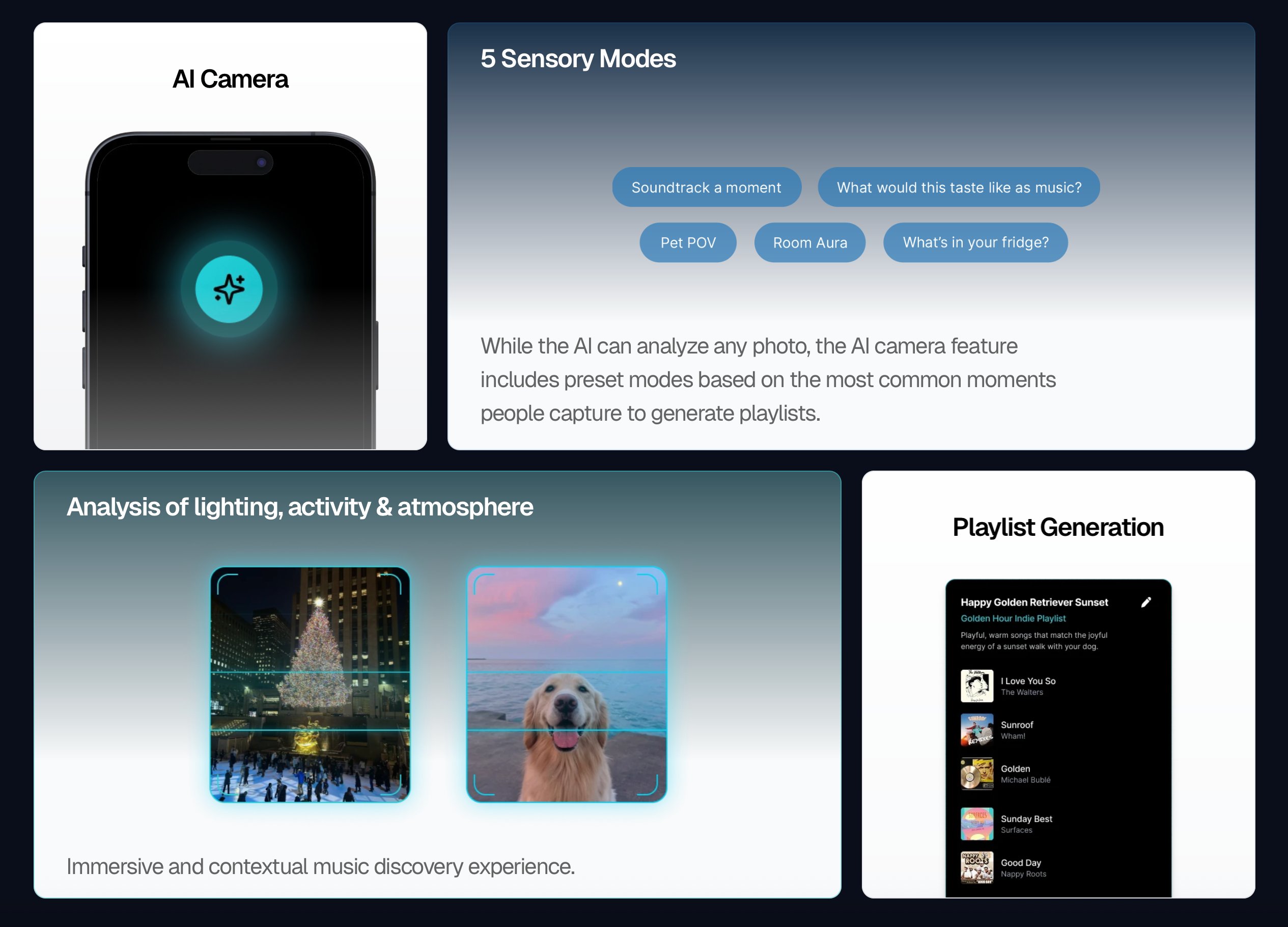
The user captures a moment with their phone camera. The system interprets visual context and generates a playlist that matches the energy, mood, and setting of that scene.

AI Analysis

Lighting

The system reads lighting conditions like warm golden hour, dim ambient spaces, or bright daylight to gauge mood temperature and energy level.

Atmosphere

Environmental cues like crowded spaces, quiet corners, outdoor scenery, or cozy interiors signal the kind of energy the music should match.

Scene

Objects and settings like food on a table, a desk setup, a park, or a cityscape tell the system what kind of moment the user is in.

5 Sensory Modes

01

Soundtrack moment

Capture your current scene and generate a playlist that matches the exact visual mood, lighting, and energy around you.

02

Taste to music

Use food visuals to translate flavor cues into music tone, then generate a playlist that feels spicy, sweet, rich, or mellow.

03

Room vibe

Analyze interior atmosphere and ambient cues to generate a playlist that fits your room's current aura.

04

Everyday life

Turn an ordinary daily snapshot into contextual discovery and generate a playful playlist from routine life moments.

05

Pet POV

Scan your pet's scene and generate a mood-matched playlist that feels curious, light, and emotionally sticky.

Preset Modes

For moments when users want faster results without pointing the camera, preset modes offer one-tap shortcuts for common contexts like workout, cooking, study, commute, and wind-down. Each preset combines default environmental assumptions with the user's listening history.

5 sensory modes UI

End-to-end flow

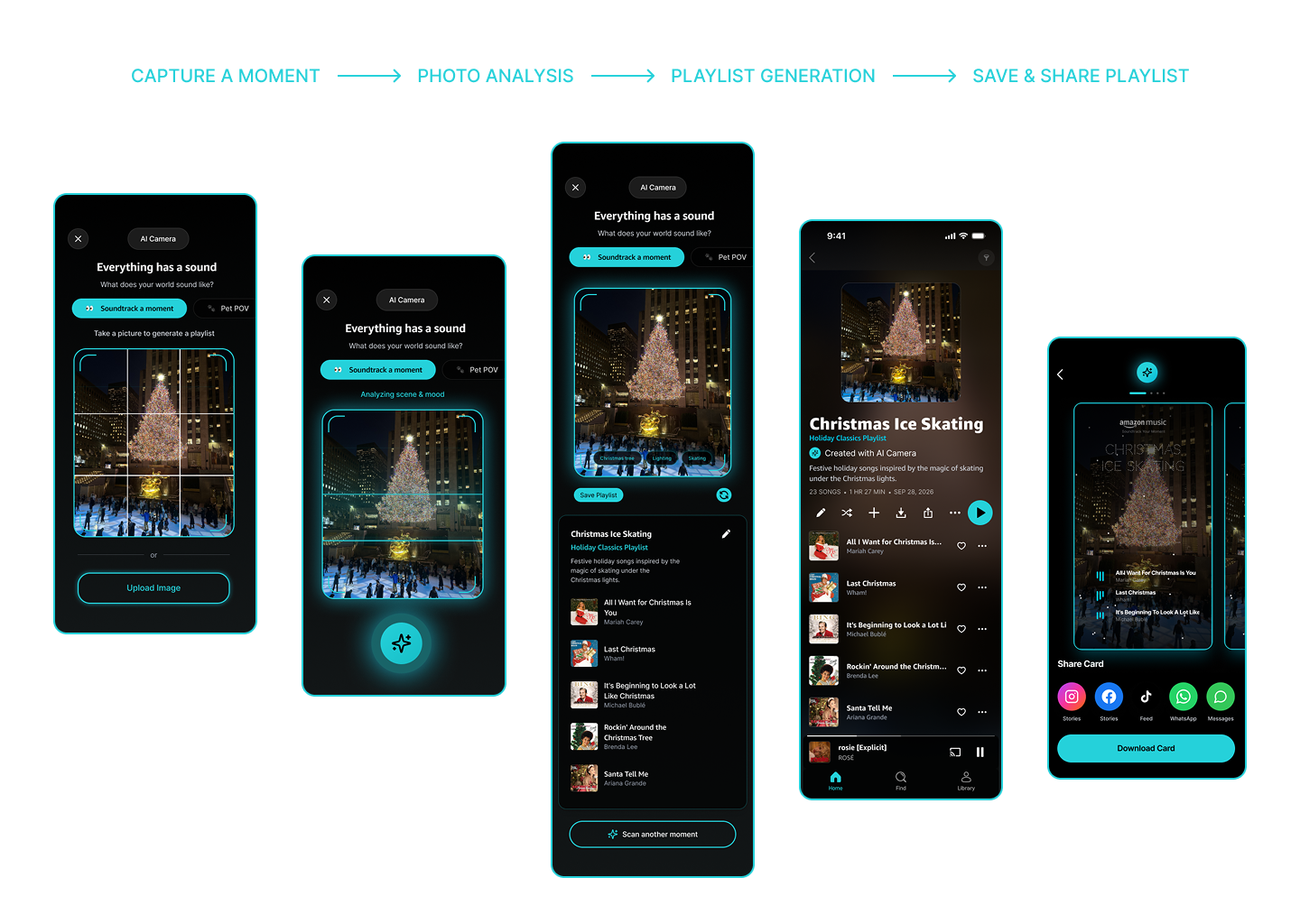
AI Camera end-to-end flow

Step 01

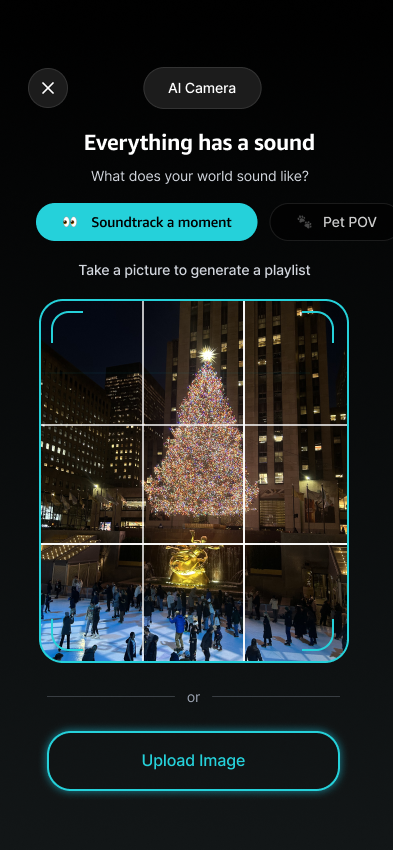
Capture

The user points the camera at a moment, whether it is a room, skyline, desk, pet, meal, or commute. The interaction is immediate and requires no typing or browsing.

Step 02

Analyze

The system reads visual cues like lighting, setting, energy, objects, and atmosphere to infer the contextual signals behind the scene using AWS-powered interpretation.

Step 03

Playlist

Amazon Music returns a playlist tailored to that specific moment instead of a generic search result. Discovery feels responsive, contextual, and surprising.

Step 04

Playback

The generated mix is refined using the listener’s history, saved artists, and skip behavior so the result feels personal rather than random.

AI scan soundtrack screen

AI scan

Analyze to Generate
Generated playlist soundtrack screen

Generated playlist

Ecosystem Strategy

The feature works because Amazon can distribute and reinforce it.

AI Camera is the product hook. The larger strategy is acquisition plus retention: bring users in through the ecosystem, then give them a reason to come back inside the music product.

200M+

Prime members globally

55M+

Amazon Music subscribers

<5%

Prime-to-Music conversion rate

Integration points

How AI Camera connects across the ecosystem

Alexa can prompt contextual discovery on Echo devices when users ask for a vibe, routine, or ambient soundtrack, extending AI Camera beyond the phone.
Prime membership becomes the acquisition funnel, surfacing AI Camera as a differentiated benefit rather than another hidden music perk.
Fire tablets and Fire TV can showcase the feature as a richer, more interactive entry point into the Amazon Music experience.
Shopping and lifestyle touchpoints across Amazon can frame the product around moments and moods, not just catalog access.

The gap

Amazon has the reach. It needs the product moment.

Ecosystem strategy map

Edge cases

Misinterpretation

When the AI reads a scene incorrectly, the system should offer a quick correction flow with alternative mood or energy options rather than forcing the user to re-capture.

Low lighting

In dark or unclear environments, the system should detect low confidence and offer a fallback path such as a simple mood prompt or recent context suggestion.

Privacy concerns

The product must make it transparent what is analyzed, what is stored, and how quickly a photo is discarded. Users should have full control over their visual data.

Incorrect mood detection

Users need lightweight controls to steer the result after generation. Thumbs up or down, energy sliders, or a regenerate option let them refine without starting over.

Impact

Engagement potential

AI Camera gives Amazon Music a stronger first-use moment than another recommendation rail or onboarding survey. The novelty and low friction create a memorable activation experience.

Discovery improvement

By starting from real-world context instead of search history, the feature surfaces music that feels genuinely fresh and relevant rather than algorithmically familiar.

Market differentiation

No competitor owns real-world contextual discovery. This concept gives Amazon Music a clear, defensible story in a crowded streaming market.

Learnings

What this concept clarified for me.

The project was most useful when it stopped being about a feature in isolation and started becoming a system-level argument for how Amazon Music could grow.

Emotion beats utility when the product category is expressive

Music discovery is not just a functional task. It is an emotional handoff between life and interface. The strongest concept was the one that honored that relationship.

AI needs direction, not blind trust

The concept worked best when AI handled the heavy lifting but still gave users light ways to correct or refine the result. Full automation without control felt unreliable.

Ecosystem thinking changes product strategy

The most valuable part of the idea was not just the feature itself. It was how AI Camera could connect Prime, Alexa, AWS, and Amazon Music into one acquisition-to-retention story.

You’ve reached the end, ready for another experience?